
 العربية
  Azərbaycan
  Kurdish
Extracorporeal Shock Wave Lithotripsy
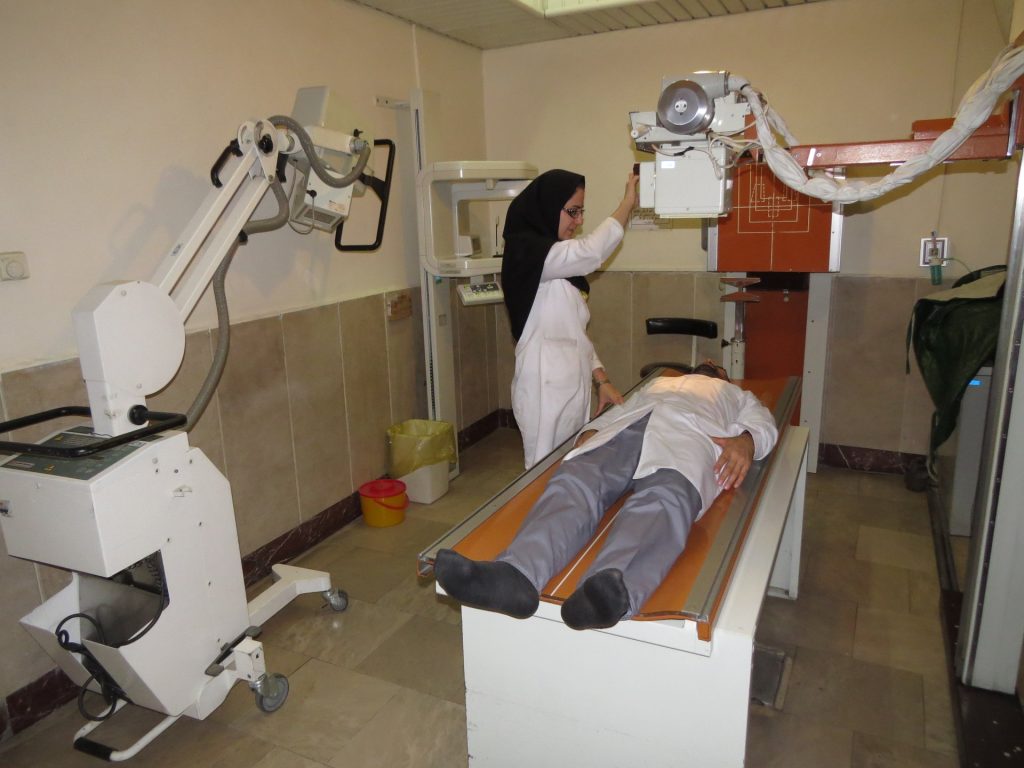
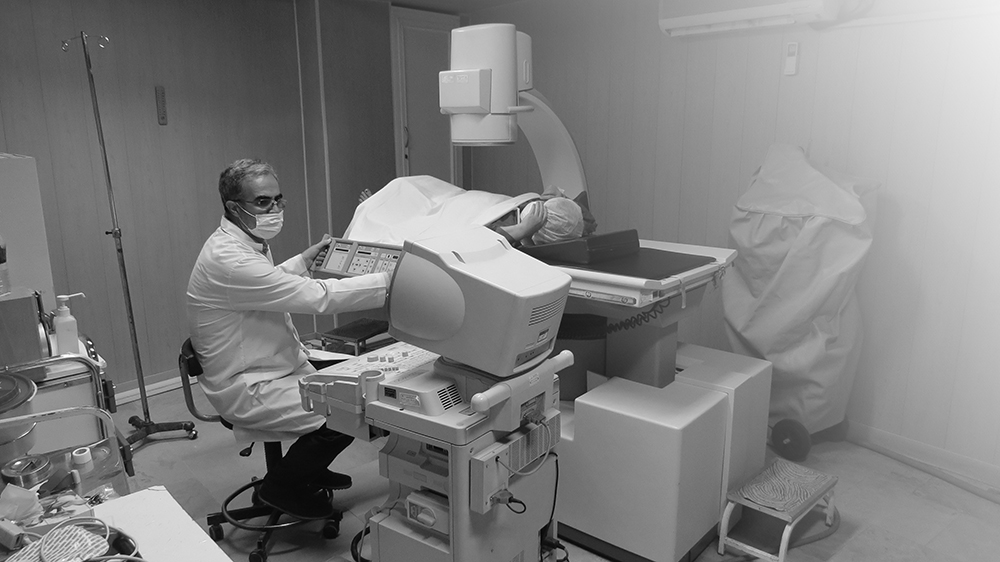
The extracorporeal lithotripsy unit, located on the second basement level of the hospital, is equipped with a Modilith lithotripter manufactured in Switzerland. This device is one of the finest of its kind in terms of accuracy, effectiveness, and patient comfort during the procedure, and is suitable for individuals of all weights and body types.
The lithotripsy unit operates during morning and afternoon shifts and accommodates more than 30 patients per day. The extracorporeal shock wave lithotripsy (ESWL) unit holds cooperation contracts with all of the country’s official insurance providers.
Extracorporeal Shock Wave Lithotripsy
Approximately 90% of people experience pain caused by stones and small stones in the kidney and urinary system at some point in their lives. In 85% of cases, these stones and small stones are eliminated through outpatient treatment or even without treatment, and the issue is resolved. However, in 15% of cases, the stones are large and require treatment. In previous years, the treatment of kidney stones was performed solely through surgery, which was a major, costly, and risky operation, with complications that could affect the patient for years. Today, open surgery is no longer used for the treatment of large stones; instead, intracorporeal and extracorporeal lithotripsy methods are used, which are less expensive, lower-risk, and outpatient procedures. Fortunately, Behboud Hospital is equipped to perform both types of treatment for these patients with the most advanced devices. The extracorporeal lithotripsy unit of Behboud Hospital uses one of the most advanced devices available in the northwest of the country, branded Storz, manufactured in Switzerland. More than 3,000 patients are treated annually with this system. In extracorporeal shock wave lithotripsy (ESWL), electromagnetic waves are used to break kidney stones. After this treatment, the patient can pass the broken pieces of stone through the urinary system.
Kidney stones form in one or both kidneys. If there is an imbalance in the amount of salts and minerals in the urine, the patient may develop kidney stones.
These stones are often small enough in size and acidity/alkalinity (pH) that they pass spontaneously through the urine without causing harm. However, if they cannot be eliminated, the physician may recommend extracorporeal or intracorporeal lithotripsy.
Two Types of Lithotripsy
- Intracorporeal lithotripsy is used for stones in the bladder, ureter, and kidney. After the patient is anesthetized, a device is introduced through the urinary tract into the bladder or ureter, or through the skin via the flank into the kidney, and under direct vision the stone is broken by various types of lithotripters.
- Extracorporeal lithotripsy does not require general anesthesia. The lithotripter probe does not have direct contact with the stone and breaks it remotely using electromagnetic waves.
Lithotripsy is performed in two locations: within the ureter and within the kidney. Lithotripsy is performed in the ureter when the passage of urine through the ureter is obstructed; medically this is called hydronephrosis. For stones in the kidney that cause pain, bleeding, obstruction of the upper ureter, hydronephrosis, or kidney infections, lithotripsy must be used.
Lithotripsy at Behboud Hospital
The lithotripsy section of Behboud Hospital began operations in early 1386 (2007), and thousands of patients with kidney and ureteral stones requiring urgent surgery have been treated at this center. Lithotripsy for infants and children is also performed at this center under light anesthesia. The hospital’s lithotripsy systems have been upgraded several times since their initial installation and are equipped with the latest models.
The Behboud Hospital lithotripsy device is among the best of its kind in the world. The unit is equipped with ultrasound and fluoroscopy and is capable of breaking the majority of urinary tract stones on an outpatient basis, without requiring hospitalization or general anesthesia. This method is more economical, easier, less risky, and superior to surgery.
Advantages of Behboud Lithotripsy Compared to Other Lithotripters
- Significantly less pain than similar devices.
- In addition to breaking kidney stones, the device is capable of breaking stones inside the ureter, which other lithotripters are unable to do.
Stone hardness varies; if the stone is excessively hard, the lithotripter will not be able to break it (2 to 3% of stones have these characteristics). Stone hardness can only be determined by CT scan.
Preparation Before Lithotripsy
Before performing lithotripsy, tests for urinary infection and coagulation disorders must be performed.
Common Side Effects of Lithotripsy
Bleeding after lithotripsy (blood in the urine) is among the predictable side effects, which usually resolves within a few days after lithotripsy. The side effect is generally not severe, particularly if the procedure is performed by a skilled and experienced physician.
Methods of Preventing Recurrence of Urinary Stones
Stone formation in the kidney usually begins due to low fluid intake or excessive sweating, leading to supersaturation of the urine with salts present in the urine, including oxalate, urate, and others. After the formation of the initial nucleus of the stone, supersaturation is no longer required for the stone to grow; rather, salt crystals present in the urine adhere to the initial nucleus and the stone enlarges, possibly becoming symptomatic. To prevent the formation of an initial stone or recurrence of stones, regardless of stone type, the following methods are effective:
- Limiting salt intake in the diet.
- Drinking large amounts of fluids to prevent supersaturation of the urine with salts. The habit of consuming large amounts of fluids, preferably water or weak tea, is effective for the health of the urinary system, especially for the prevention of stone formation in all conditions and ages. Therefore, drinking water and weak tea is always recommended, especially at night before sleep, in hot seasons, during physical activity, and in cases of excessive sweating.
